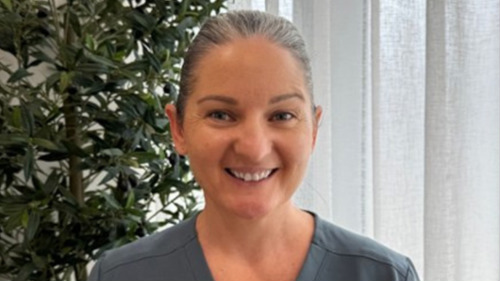
Hi! I'm Amanda and I'm a dental assistant here at Smiles HQ. I have decided to start Invisalign treatment, and I'd like to share my experience with you if you're curious about what the process is like.
I didn't "need" braces when I was younger, as I had straight teeth, but I am finding as I get older (Hello 40's!), that my deep bite is starting to cause me some issues with tilting and chipping lower teeth. I also get some minor niggly jaw irritation due to clenching and grinding and having such a tight bite. I have a considerable gap between my lower central teeth, which I am noticing more in photos, and my upper central teeth are starting to butterfly (turn in towards each other), which I am not a fan of. Let's see if Invisalign clear aligners can help with my concerns....
We started the process with an exam and some X-rays: a full-mouth OPG and some smaller bitewing X-rays. This gave my dentist a full picture of what is happening in my mouth and what our starting point was.
We had a discussion about what I am hoping to achieve and whether Invisalign is the best choice for me. After deciding to go ahead, we took a scan of my teeth using our digital scanner (I still find the images produced on the scanner fascinating! The detail is incredible), and then some photos and a short video on the Invisalign app. My dentist then went to work behind the scenes to create my Invisalign treatment plan.
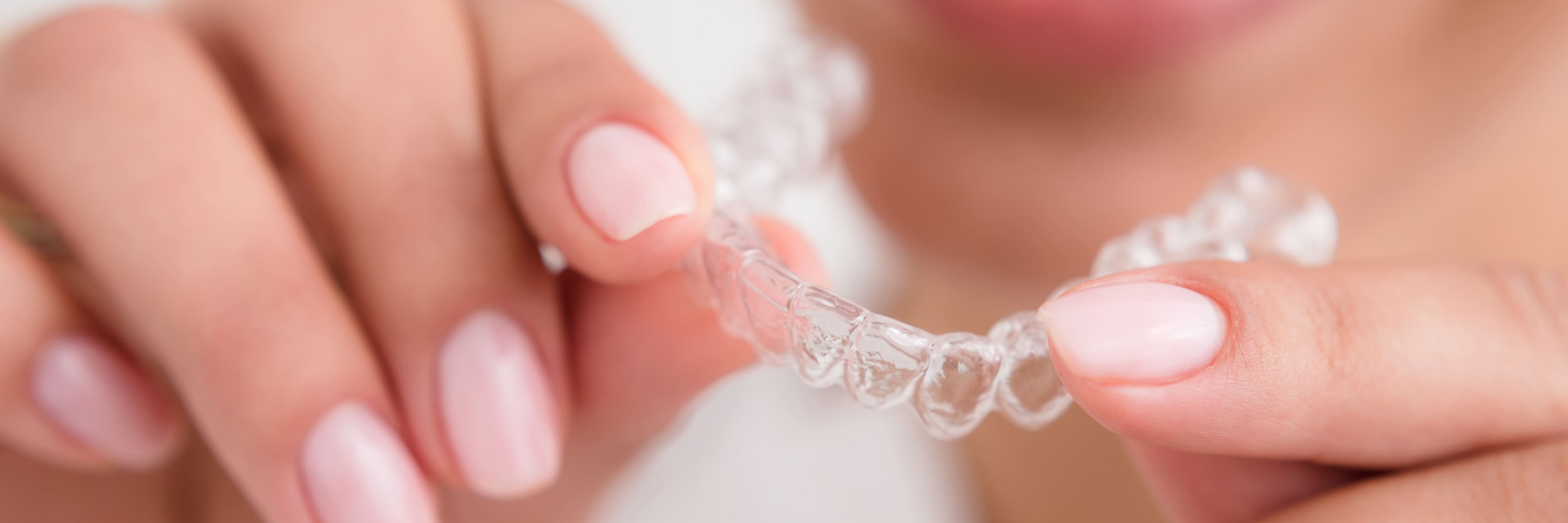
Within a few weeks, my aligners had arrived! I have 19 sets of aligners in my treatment plan, and we will reassess towards the end of these aligners to see if there is further refinement to do. I have an attachment on nearly all of my teeth. These are little buttons of composite that will stay on my teeth until the end of my treatment. I find it so interesting how different every Invisalign case is. In my case, I have a lot of Invisalign attachments, but I don't require any IPR (Interproximal Reduction, a light filing of the surfaces between the teeth). Some people have far fewer attachments but require IPR at different points throughout their treatment.
The day then arrived to have my attachments put on and get the active part of my treatment underway! Hooray! I am really excited to see how my smile changes over the next 6 - 12 months. Putting the attachments on is like getting little fillings, but we don't drill into the teeth. We etch and bond and then use the attachment guides to place the composite exactly where it needs to be for the aligners to attach to and move the teeth. We remove any excess composite so that the aligners sit properly. Then it's time for the aligners to start moving the teeth into their new position!
The aligners are a super snug fit. They're quite thin, not too bulky, and they feel nice and smooth.
At first, I had some trouble getting them out! They're such a snug fit that I felt like I was going to break my fingernail, so I opted for the little hook that came with my take-home package. Honestly, I am so impressed with our patients who can get their aligners out when they have them issued. I've seen this done so many times, I've worn a night guard for years, and I still struggled big time! There is definitely a technique to getting them in and out, and it takes some time to get used to it. I also managed to catch my cheek and my lip in my aligners when putting them in. Try not to do that; it hurts. I may have also been a bit dribbly when first trying to get the lower aligner out. Be warned not to do this in a public space until you are feeling confident and competent. I'm still searching for an elegant and discreet way to get my trays out, but I don't think there is one.
The chewies are great for getting the aligners to really engage well. I have a strong gag reflex, so just having the aligners in was a bit of a challenge for a few days. Once I got used to that, I started using the chewies, and I could feel the difference in how well the aligners were engaging.
For the aligners to work, you have to be committed to wearing them for 22 hours a day. I was surprised by how long it takes me to eat!
The only thing that should go in your mouth when you're wearing your trays is water. I have managed to really cut down on my snacking habit, so there's a bonus - haha! I also find my attachments quite irritating when my trays are out, so I eat quickly so I can get my aligners back in.
To quote Gurgle from Finding Nemo, "The human mouth is a disgusting place," so when you are wearing aligners for 22 hours a day, they do get a bit gross. Every time you take them out, it's a good idea to give them a wash with soapy water or a rinse with plain water. If you can brush your teeth before putting them back in, that's ideal, but if not, just rinse your mouth with water. Hot tip: banana lollies will stain your aligners if you don't rinse your mouth. It happened to a friend of mine. When the aligners get a bit yucky, I soak them in white vinegar while they're out, usually when I'm eating my breakfast, and this freshens them back up.
When I started wearing my aligners, and each time I start a new set, my teeth feel a little tender for a few days and the trays feel like they don't really fit perfectly. Over the days, my teeth gradually move, and I know it's time to change aligners when they go in and out really easily, feel like they're fitting comfortably, and my teeth no longer feel tender. I'm finding this is at around the 10-day mark at the moment.
That's how my Invisalign experience is tracking so far. I will continue to wear my aligners for 22 hours a day and check back in when I'm halfway through my initial set of aligners!
Curious about whether Invisalign may be suitable for you? Contact the Smiles HQ team to arrange a consultation and discuss your smile, bite and treatment options.